
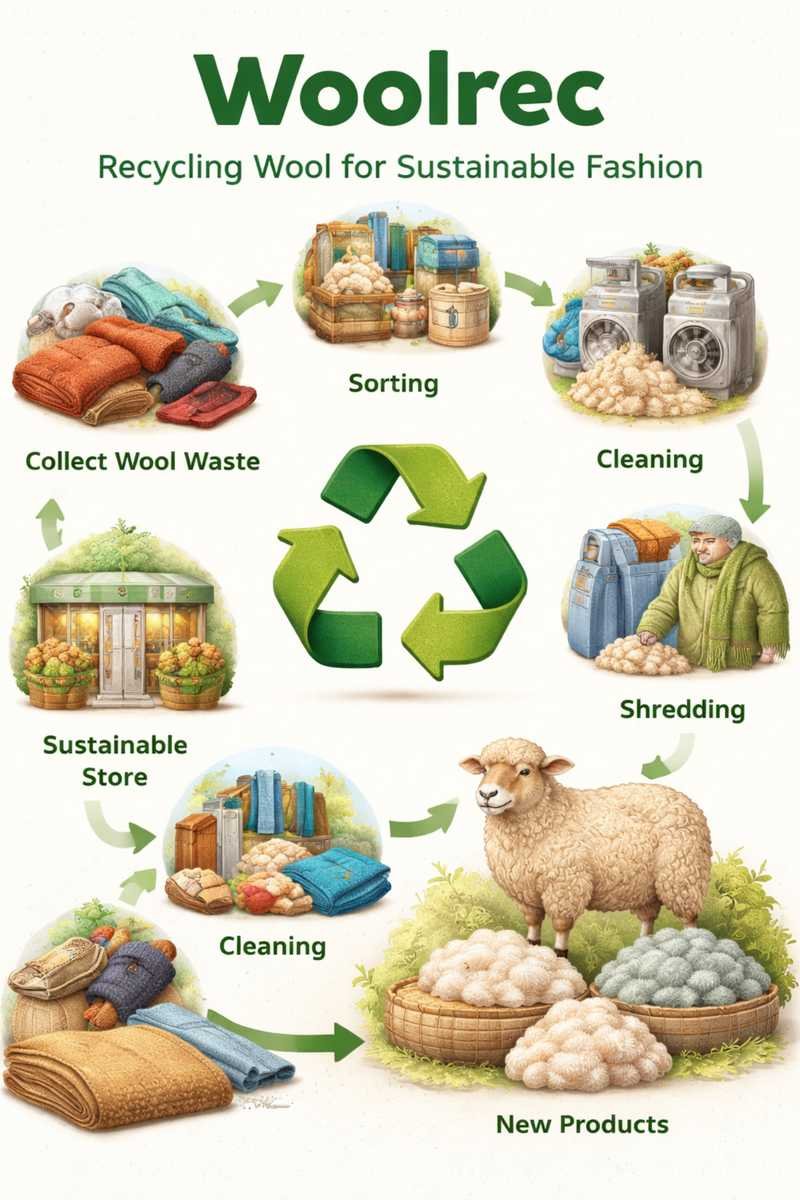
Clothing waste is a big problem around the world. Every year, a lot of clothes are thrown away. Many of these clothes are made from wool. Even though wool is a natural material, making new wool uses land, water, energy, and time. When wool clothes are thrown away, all those resources are wasted.
Woolrec means recycling wool and using it again to make new products. Instead of sending old wool clothes to landfills, Woolrec helps turn them into new yarn, fabric, and clothing. This supports a system called the circular economy, where materials are used again and again instead of being thrown away.
In simple words, Woolrec helps to:
-
Reduce clothing waste
-
Save natural resources
-
Lower pollution
-
Reuse old wool in new products
-
Support eco-friendly fashion
The Problem of Wool and Clothing Waste
The fashion industry makes a lot of waste. Many clothes are worn only a few times before being thrown away. This causes serious harm to the environment.
Problems with making new wool:
-
Sheep farming uses a lot of land
-
Wool cleaning and processing use a lot of water
-
Factories use energy to make yarn and fabric
-
Transport creates air pollution
Main sources of wool waste:
-
Factory waste: leftover fabric and yarn
-
Clothing waste: old or unwanted wool clothes
What Does Woolrec Mean?
The word Woolrec comes from two words:
“Wool” + “Recycle.”
It means taking old wool and turning it into something useful again.
Woolrec can mean:
-
A way to recycle wool
-
A system to reuse wool
-
A green method for making wool products
-
A part of sustainable (eco-friendly) fashion
Types of wool used:
-
New wool: fresh wool from sheep
-
Recycled wool: wool taken from old clothes
-
Mixed wool: recycled wool mixed with new wool to make it strong
How Woolrec Works (Step by Step)
Woolrec follows a clear process to change old wool into new products.
Woolrec Process Table
| Step | Stage | What Happens |
|---|---|---|
| 1 | Collection | Old wool clothes and factory waste are collected |
| 2 | Sorting | Wool is sorted by color and type |
| 3 | Cleaning | Dirt and chemicals are washed out |
| 4 | Shredding | Clothes are cut into wool fibers |
| 5 | Blending | Recycled wool is mixed with new wool |
| 6 | Spinning | Fibers are turned into yarn |
| 7 | Making Products | Yarn is used to make new items |
Why sorting by color is helpful:
-
Less need to dye the wool again
-
Saves water and chemicals
-
Reduces pollution
Technology Used in Woolrec
Woolrec uses machines to break old clothes back into fibers. This is called mechanical recycling.
Tools and methods used:
-
Machines to cut clothes into fibers
-
Smart machines to sort different materials
-
Systems to mix recycled wool with new wool
-
Tracking systems to know where materials come from
Mechanical Recycling vs. Chemical Recycling
| Point | Mechanical Recycling | Chemical Recycling |
|---|---|---|
| How it works | Cuts clothes into fibers | Uses chemicals to break fibers |
| Impact on nature | Lower | Higher |
| Cost | Lower | Higher |
| Good for wool? | Yes | Not often used |
Benefits of Woolrec
Woolrec helps the environment, the economy, and society.
Environmental benefits:
-
Less clothing goes to landfills
-
Less need to make new wool
-
Saves water and energy
-
Less air pollution
-
Less use of harmful chemicals
Economic benefits:
-
Turns waste into useful material
-
Helps create green jobs
-
Saves money for factories
-
Supports local recycling businesses
Social benefits:
-
Supports fair and clean fashion
-
Helps people make better buying choices
-
Builds trust in eco-friendly brands
Where Woolrec Products Are Used
Recycled wool can be used in many ways, not only for clothes.
Common uses of Woolrec:
-
Clothing: sweaters, coats, scarves
-
Home items: blankets, carpets, cushions
-
Buildings: wall and sound insulation
-
Workwear: uniforms for staff
Use Case Table
| Area | Examples | How It Helps |
|---|---|---|
| Fashion | Jackets, knitwear | Reduces fast fashion waste |
| Home | Rugs, blankets | Supports long-lasting products |
| Buildings | Insulation | Saves energy in homes |
| Workwear | Uniforms | Supports green companies |
Woolrec vs. New Wool
| Feature | Woolrec (Recycled Wool) | New Wool |
|---|---|---|
| Source | Old clothes and waste | Sheep farms |
| Waste | Reduces waste | Creates more waste |
| Water use | Low | High |
| Pollution | Lower | Higher |
| Sustainability | High | Lower |
Challenges of Woolrec
Woolrec is helpful, but it is not perfect.
Main challenges:
-
Recycled fibers can be shorter
-
Often needs to be mixed with new wool
-
Hard to recycle mixed fabrics (wool + plastic)
-
Needs better sorting systems
-
Recycling machines are expensive
-
Some people think recycled wool is low quality
The Future of Woolrec
Woolrec is growing as more people care about the environment.
Future trends:
-
More brands using recycled wool
-
Stronger rules about waste
-
Better recycling machines
-
More clear information about materials
-
More people choosing eco-friendly clothing
How You Can Support Woolrec
Everyone can help, even with small actions.
Simple ways to help:
-
Buy clothes made with recycled wool
-
Take good care of wool clothes
-
Fix clothes instead of throwing them away
-
Donate old wool clothes
-
Choose brands that care about the planet
-
Buy less, but buy better
Frequently Asked Questions
Is recycled wool strong?
Yes, when mixed with some new wool, it can be strong and long-lasting.
Is Woolrec good for the environment?
Yes, it reduces waste and saves natural resources.
Can wool be recycled many times?
Yes, but each time the fiber becomes a little weaker.
Is recycled wool cheaper?
Often yes, because it uses old materials.
Conclusion
Woolrec is a smart and simple way to deal with wool waste. It helps reduce pollution, saves resources, and supports eco-friendly fashion. By recycling old wool and turning it into new products, Woolrec helps create a better future for the planet.
When brands and people work together, Woolrec can become a normal part of how clothes are made and used. Small choices today can lead to a cleaner and greener tomorrow 🌱